When Organizations Fight Themselves: Understanding and Overcoming Internal Resistance to Change
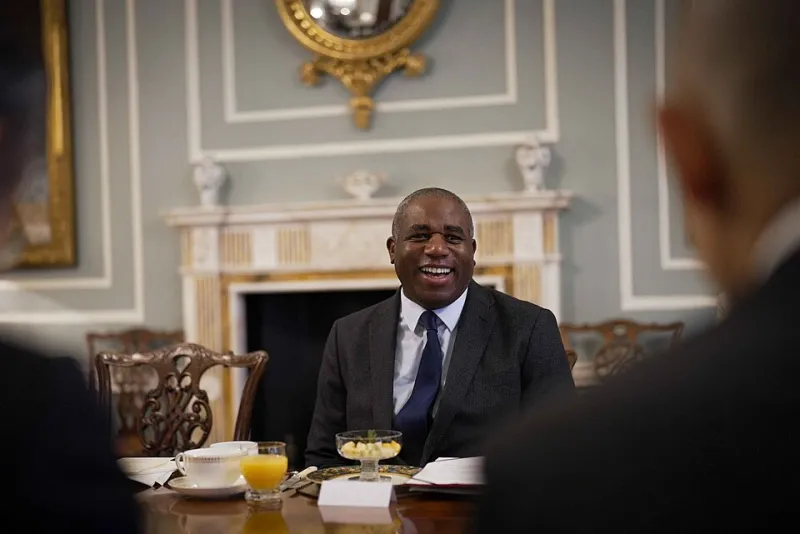
Photo: Foreign, Commonwealth & Development Office, CC BY 2.0, via Wikimedia Commons
The Paradox at the Heart of Organizational Change
Ask any senior leader about their company's appetite for change, and most will tell you the organization is ready to evolve. Ask the people doing the work two levels down, and you will often hear something different. Initiatives launched with executive enthusiasm have a remarkable tendency to slow, stall, and eventually disappear—not because the strategy was wrong, but because the organization itself pushed back.
This is not a failure of willpower or communication, though both matter. It is something more structural, more instinctive, and in many ways more fascinating. Organizations develop their own form of resistance—a set of psychological, cultural, and procedural mechanisms that identify unfamiliar change as a threat and move, often invisibly, to neutralize it. Understanding this dynamic is essential for any leader serious about transformation that actually endures.
Why Organizations Resist: The Three Layers of Defense
Organizational resistance rarely presents itself as open opposition. More often, it operates through subtler mechanisms that can be difficult to recognize in real time.
The psychological layer is perhaps the most familiar. Change asks people to accept uncertainty about their roles, their relevance, and their futures. Even employees who intellectually endorse a new direction will often behave in ways that protect the status quo. This is not cynicism—it is a deeply human response to perceived risk. When people cannot clearly see where they fit in a transformed organization, their default instinct is to slow the transformation down.
The structural layer is less discussed but equally powerful. Organizations encode their assumptions into processes, approval chains, reporting structures, and incentive systems. These structures were designed to optimize for a particular way of operating, and they do their job well—including resisting changes that threaten to disrupt them. A company that rewards managers based on headcount will structurally resist automation initiatives. A firm where budget authority is tightly centralized will instinctively push back against decentralized decision-making, regardless of what the strategy documents say.
The cultural layer is the most durable of all. Culture is the accumulated memory of what has worked and what has not, expressed through norms, language, rituals, and unspoken rules. When a new initiative conflicts with those accumulated lessons—even implicitly—the culture will move to protect its own logic. This is why so many transformation programs that look compelling on paper encounter friction the moment they meet the actual organization.
The Mistake Leaders Most Commonly Make
The conventional response to organizational resistance is to push harder. Leaders double down on communication campaigns, add more training, or restructure accountability to force compliance. Occasionally this works. More often, it drives resistance underground, where it becomes harder to see and more difficult to address.
The more productive reframe is to treat resistance not as an obstacle but as diagnostic information. When a change initiative encounters pushback, the organization is communicating something meaningful about its current state, its concerns, and the gaps between the proposed change and the conditions necessary to sustain it. Leaders who learn to read that signal—rather than simply overriding it—are far better positioned to design transformations that last.
Designing for Acceptance: A Framework for Durable Change
The goal is not to eliminate organizational resistance, which is neither realistic nor entirely desirable. Some degree of institutional skepticism is healthy—it prevents organizations from chasing every passing trend. The goal is to design change initiatives that the organization can genuinely absorb rather than reflexively reject.
Start with the identity question. Before launching any significant initiative, ask how this change connects to—or conflicts with—how the organization understands itself. Transformations that feel continuous with the company's identity and history are far easier to integrate than those that feel like an external imposition. Framing matters enormously here. A manufacturing company that sees itself as a precision-engineering firm will respond differently to an operational overhaul if it is positioned as an extension of that precision heritage rather than a departure from it.
Audit the structural incentives. Map the existing reward systems, approval processes, and performance metrics against the behaviors the new initiative requires. Misalignment between incentives and desired behaviors is one of the most reliable predictors of initiative failure. If the structure is not updated to support the change, the structure will win—every time.
Build in early, visible wins. Resistance is partly sustained by uncertainty about whether the change will actually work. Early demonstrations of success—even modest ones—shift the internal narrative from skepticism to possibility. These wins must be genuine and specific, not manufactured enthusiasm. Credibility is the currency that buys organizational patience.
Create legitimate channels for dissent. Resistance that has no formal outlet goes underground. Organizations that build structured mechanisms for employees to raise concerns, ask hard questions, and offer alternative perspectives tend to surface problems earlier and resolve them more effectively. This is not about slowing change down—it is about making the change more intelligent by incorporating information the leadership team may not have.
Sequence the change deliberately. Not all parts of an organization need to transform simultaneously, and attempting to do so often overwhelms the system's capacity to adapt. Thoughtful sequencing—starting with areas where the conditions for change are most favorable, then using those successes to build momentum elsewhere—is a far more reliable approach than organization-wide launches that distribute friction everywhere at once.
The Role of Leadership in Reducing Friction
Leaders cannot simply mandate their way past organizational resistance. What they can do is significantly alter the conditions under which change occurs. This means being visible and consistent—not just in endorsing the initiative publicly, but in demonstrating through daily behavior that the new direction is real and permanent. Organizations watch their leaders closely during periods of transformation, and any signal of wavering commitment will be interpreted as permission to revert.
It also means being honest about the difficulty of what is being asked. Leaders who acknowledge the genuine challenges of transformation—rather than offering relentlessly optimistic messaging—build far more credibility with their teams. That credibility is what sustains momentum when the inevitable difficulties arise.
Transformation That the Organization Can Own
The organizations that navigate change most successfully are not those with the most aggressive transformation agendas. They are the ones that understand how their organizations actually work—including the mechanisms that protect the status quo—and design their initiatives accordingly.
Evolution, in any system, does not happen by force. It happens when conditions shift in ways that make new approaches genuinely more viable than the old ones. The work of organizational transformation is, in large part, the work of creating those conditions: building the psychological safety, structural alignment, and cultural momentum that allow change to take hold and grow rather than being quietly expelled.
For leaders committed to building organizations that can genuinely evolve, that work begins not with the transformation roadmap, but with an honest accounting of what the organization is already defending—and why.